
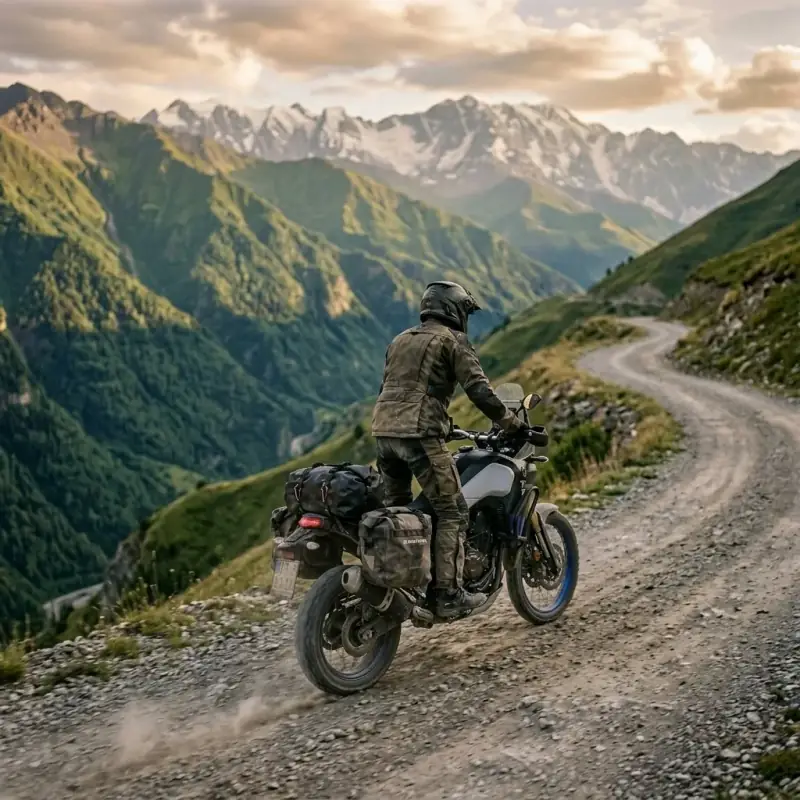
The Sarp crossing, at the eastern end of Turkey’s Black Sea coast, puts you in Batumi within a few kilometres, and the change is abrupt: a different alphabet, a different currency, different traffic, and a coast road that soon climbs into the Caucasus.
This is part two of the Black Sea & Caucasus run. Part one runs from Amasra, slowly, village by village, east along the coast and up into the Kaçkar and around it by the Ovit pass to Yusufeli. This guide starts at Hopa, the last Turkish town on the coast, and crosses into Georgia. From Yusufeli, where part one ends, Hopa is about 130 km via Artvin; the inland Türkgözü crossing is about 295 km to Akhaltsikhe via Posof and lands you nearer Vardzia. Starting fresh, Trabzon to Hopa is about 170 km.
Why Ride the Turkey to Georgia Motorcycle Route
Georgia packs a lot of contrast into short distances: subtropical Black Sea coast, then alpine pasture, then bare high passes, sometimes inside a single day. The roads range from new asphalt to the Abano Pass, so you can match the trip to what you and your bike can handle, and hospitality is part of the planning: riders regularly report being waved over and fed.
The camping instincts from the wild camping in Turkey guide carry over the border, with the local differences noted below. For the same kind of cross-border riding in the west, the Balkans country-by-country camping rules are the counterpart to this run.
The Route at a Glance
| Stage | From → To | Distance | Character |
|---|---|---|---|
| 1 | Hopa → Sarp border → Batumi | ~37 km | Short hop, the border itself is the event |
| 2 | Batumi → Adjara highlands (Khulo / Goderdzi) | ~110 km | Climb off the humid coast into pasture |
| 3 | Goderdzi → Akhaltsikhe → Vardzia | ~115 km | Southern Georgia, the cave city |
| 4 | Vardzia → Borjomi → Gori → Telavi | ~365 km | Reposition northeast to Kakheti |
| 5 | Telavi → Pshaveli → Abano Pass → Omalo | ~100 km | The pass: 75 km from Pshaveli, mostly unpaved |
Road distances are from OSRM. Georgia is not a country you measure in kilometres per hour: the 75 km from Pshaveli to Omalo eats most of a day. Treat the table as a shape, not a schedule.
Stage 1: The Sarp Border Crossing
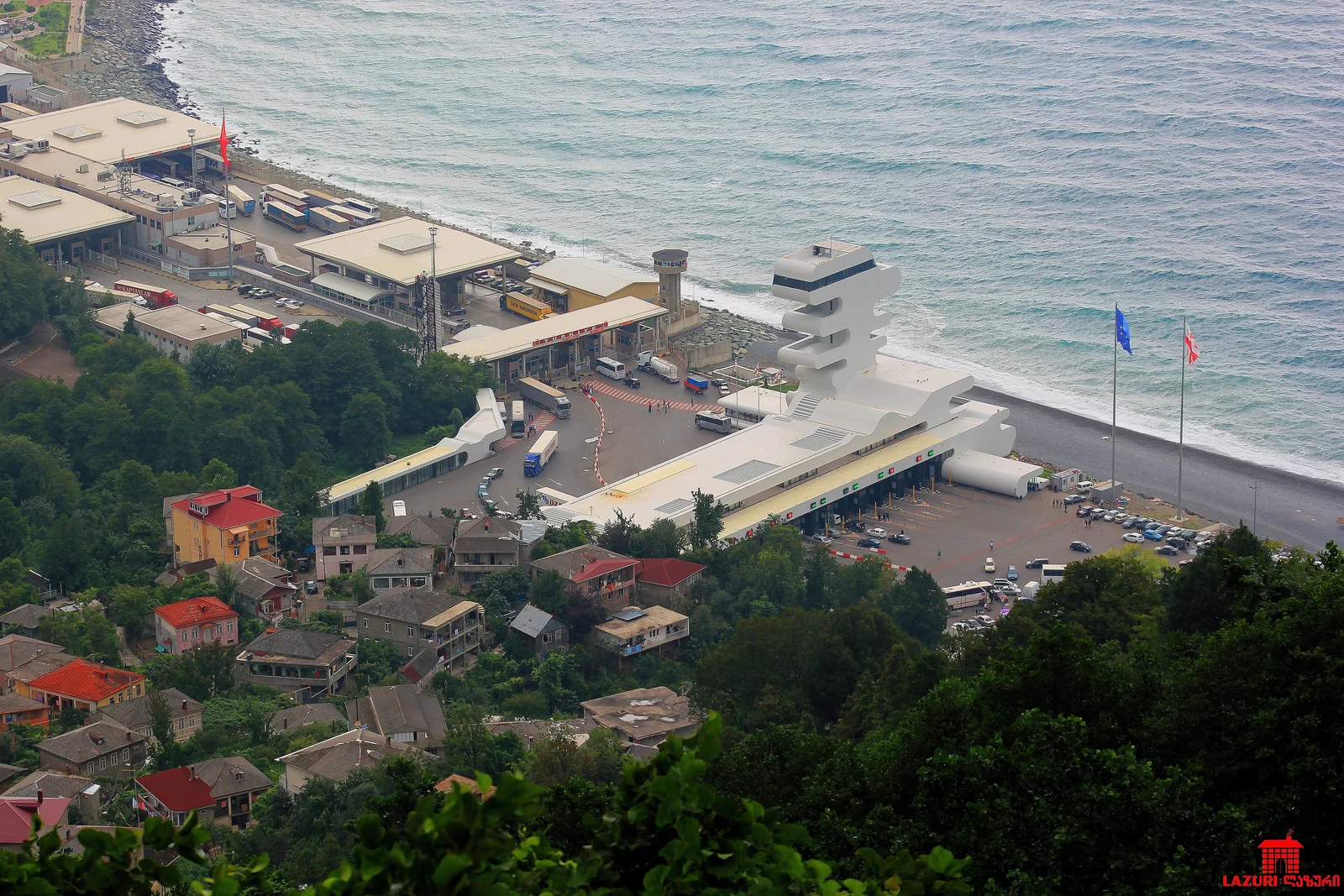
The Sarp/Sarpi crossing sits right on the Black Sea, 19 km east of Hopa on the D010. It’s the main crossing between Turkey and Georgia, it’s open 24/7, and it’s busy: coaches, freight, minibuses, foot traffic. Summer queues are real. On a motorcycle you can usually filter toward the front of the vehicle lanes, but be polite about it and watch for officials directing flow. Have some cash or a card ready for the bike’s insurance, and change money to Georgian lari on the Georgian side or in Batumi.
The sequence, broadly, is: exit Turkey (passport and vehicle out), ride the neutral strip, enter Georgia (passport in, vehicle in).
Entry for people. Georgia is unusually generous here. Turkish citizens travel visa-free and can enter on a national ID card — which matters, because a lot of this site’s readers ride from Turkey. Beyond that, citizens of around 95 countries (the US, EU states, Canada and Australia among them) get visa-free entry for up to a year. This isn’t universal, so check the rule for your own nationality before you ride; border police can also ask for proof of onward travel or funds.
Entry for the bike. A foreign-registered motorcycle can be used for 90 days from the moment you cross, with no carnet. Before the 90 days run out you either ride it out of the country or put it through a customs procedure with the Revenue Service (temporary admission or full import).
Three things that ruin the day if you get them wrong:
- Vehicle insurance. Your Turkish or European policy does not cover Georgia, which is not in the Green Card system. Every foreign-registered vehicle must carry Georgian compulsory third-party (MTPL) cover; buy it online before you go or at the border, and keep the proof with the bike, because it can be checked at the border and on the road.
- Traveller health insurance. Since 1 January 2026 every tourist must hold health and accident insurance with at least GEL 30,000 of cover, valid from entry to departure, from a Georgian or foreign insurer, in Georgian or English. Officers may ask to see it, and you can be refused entry without it. Check that your travel policy states the sum insured, the dates and that it is valid in Georgia; many motorcycle policies exclude riding, so read the small print.
- Ownership documents. If the bike isn’t registered in your name, carry a notarised letter of authorisation from the owner; it is standard overlanding practice and often asked for at the Turkish exit and the Georgian entry. It is a recommendation rather than a confirmed Georgian statute, so check the exact document set with the consulate.
For the wider logic of getting a bike across borders (plates, papers, what gets you waved through versus pulled aside), the Europe motorcycle border crossing documentation guide covers the principles, even though Georgia has its own rules.
Heads up: Border rules, insurance arrangements and visa terms between Turkey and Georgia change from season to season and are enforced locally. Treat the specifics here as a starting point and re-confirm the current rules against the official sources linked before you ride. This is a riding guide, not legal or customs advice.
There are also two quieter inland crossings that dodge Sarp’s summer queues and are scenic in their own right: Türkgözü–Vale (near Posof/Ardahan, heading toward Akhaltsikhe) and Aktaş–Kartsakhi (near Çıldır, also in Ardahan). Both are higher mountain crossings; Türkgözü in particular lands you much closer to Vardzia, so if the southern highlands are your priority you can skip the coast entirely and cross there. Check their current hours before committing.
Stage 2: Batumi and the Climb into Adjara
Batumi is a Black Sea resort city of casinos, Soviet blocks, Orthodox churches and a seafront of unusual new towers. Spend a night. Eat khachapuri Adjaruli, the boat-shaped bread with cheese and egg that the region is known for. Sort your local SIM here, draw lari from an ATM, and check your insurance paperwork before you climb away from services.
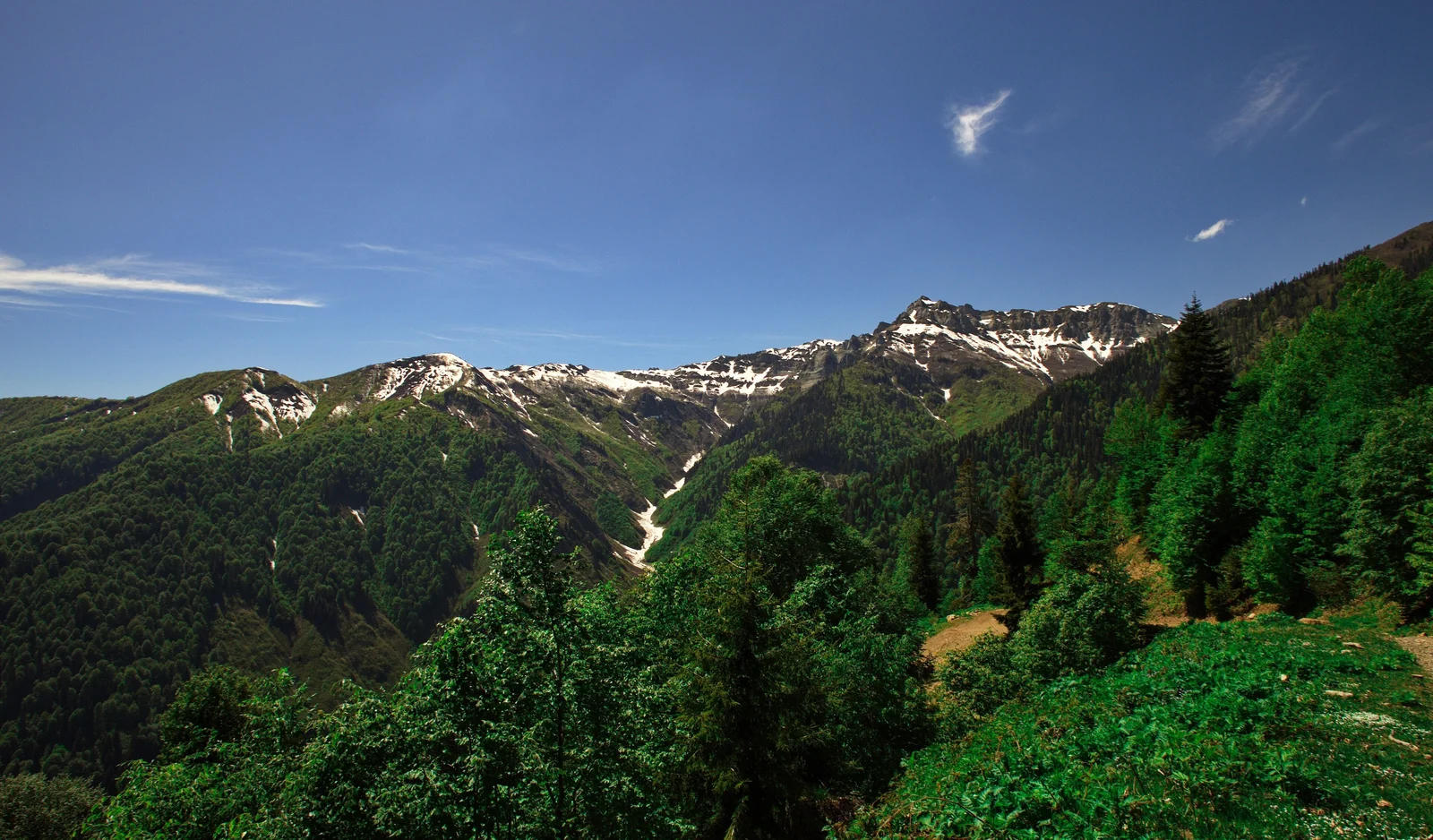
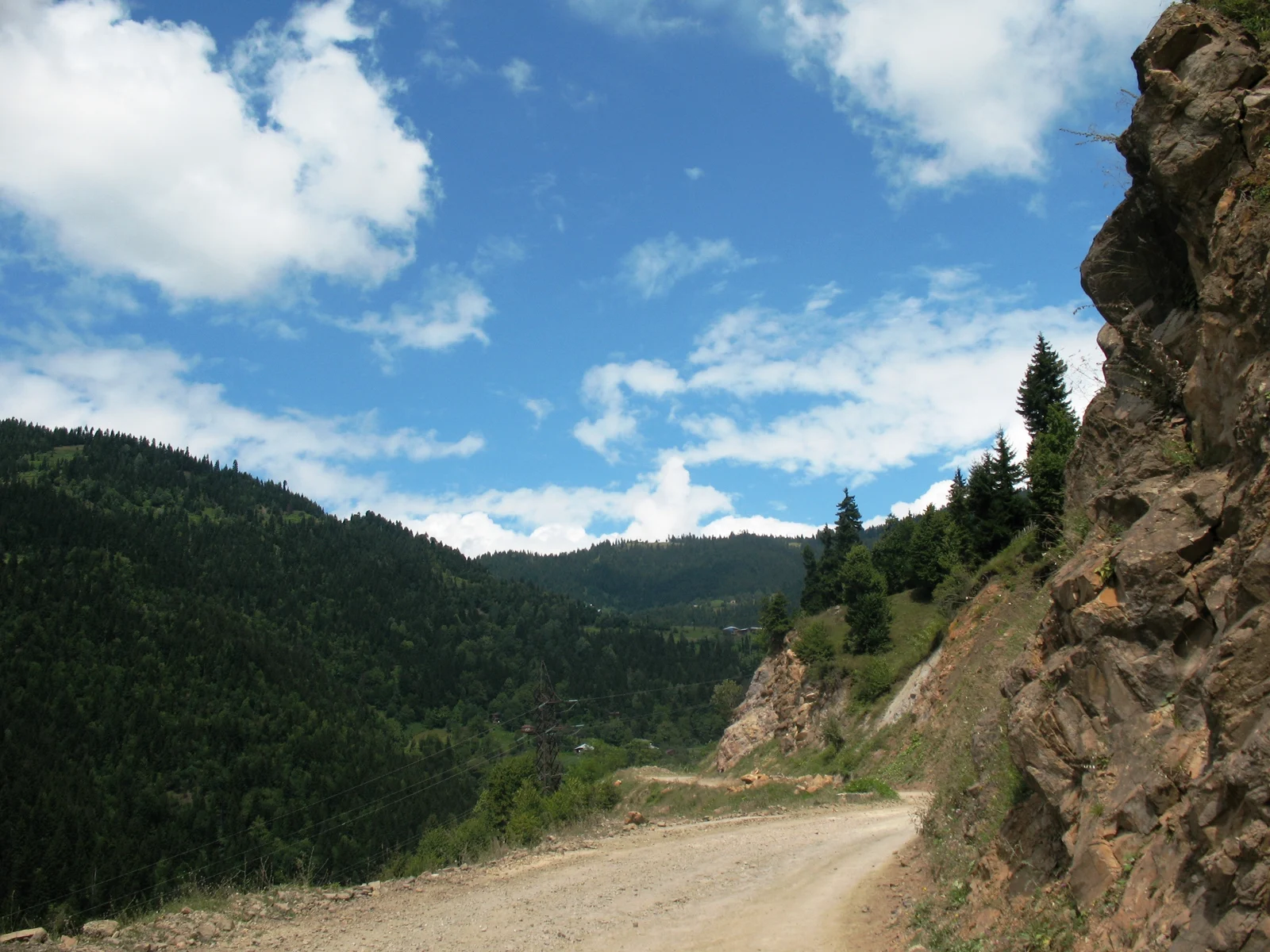
Then go up. The road from the coast toward Khulo and the Goderdzi Pass (about 110 km) trades humidity for altitude fast: green Adjaran highland, wooden houses, hay cut by hand, switchbacks, and the cable car across the gorge at Khulo. Goderdzi itself is a high pass that connects Adjara to the south; the surface varies and the weather turns, but it’s a gentler introduction to Georgian mountain riding than what’s coming later.
Stage 3: South to Vardzia
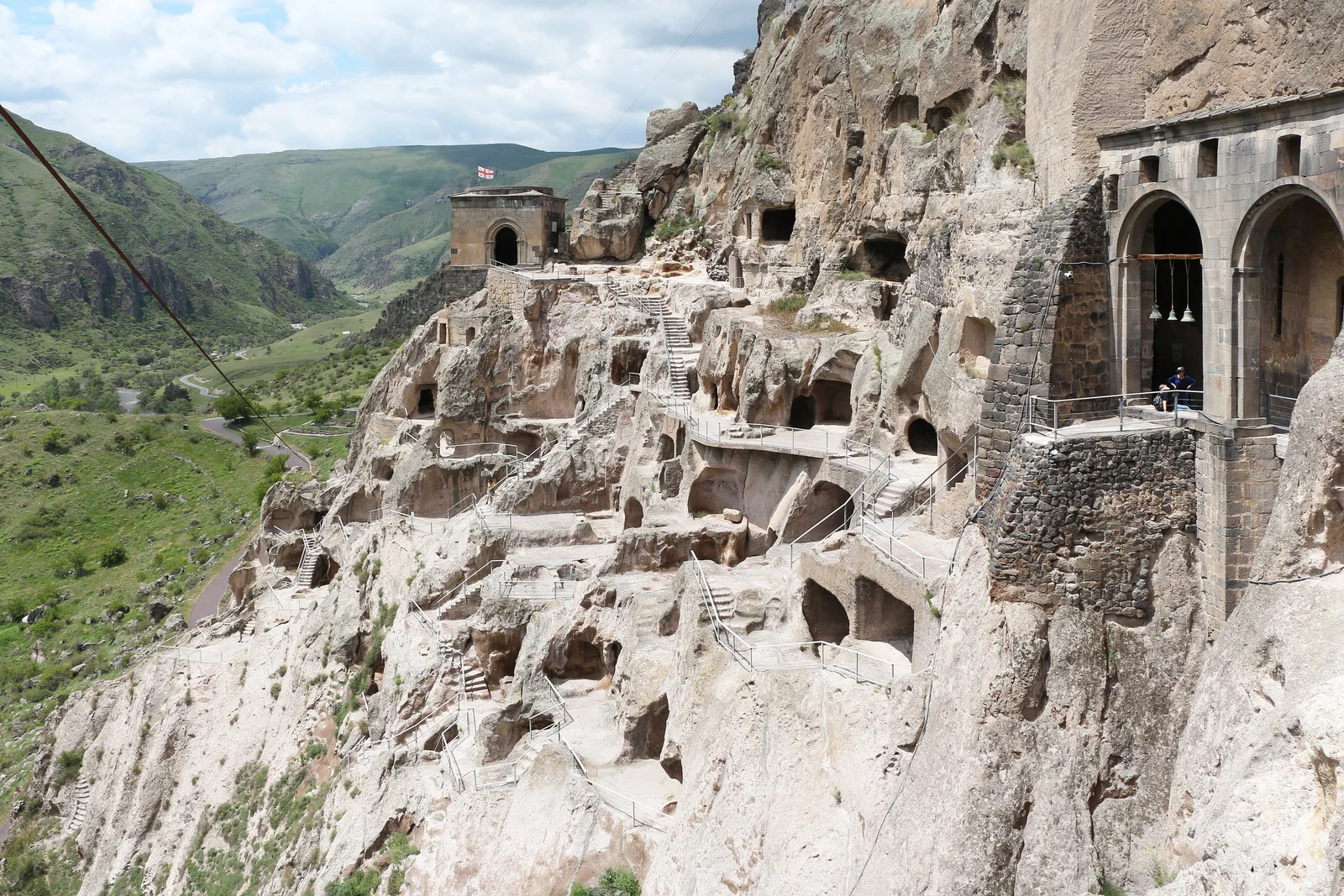
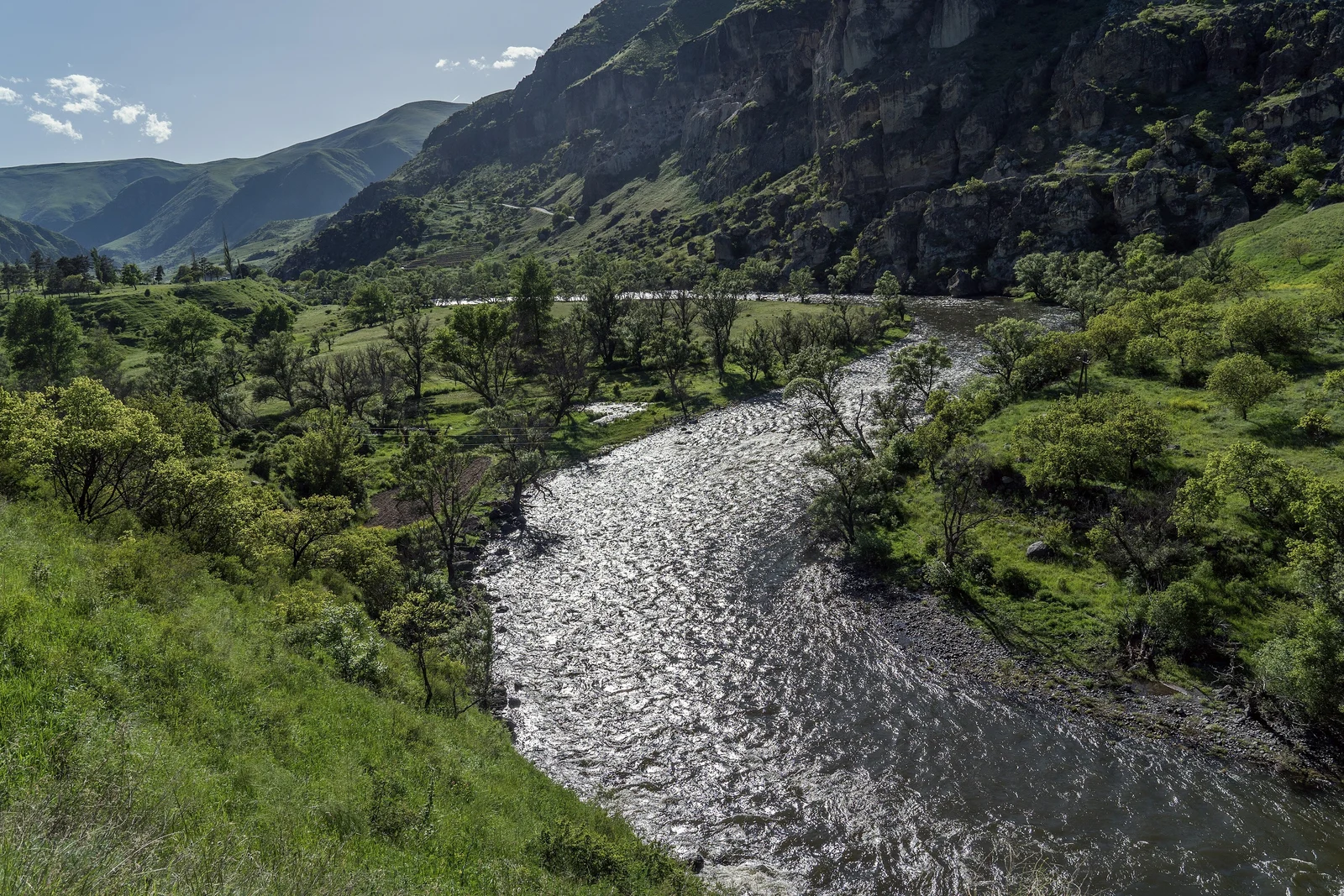
Work your way down to Akhaltsikhe, about 50 km from Goderdzi (this is also where a Türkgözü crossing drops you), and then 60 km out to Vardzia — a cave monastery city carved into a cliff face above the Mtkvari river in the twelfth century, honeycombed with hundreds of rooms, tunnels and a church with surviving frescoes. It justifies the detour on its own.
The riding down here is high, dry, open southern Georgia — a different country again from green Adjara. There’s good discreet camping along the river valleys, and the Vardzia area has small guesthouses if you want a roof and a hot meal. This is a natural place to slow down for a day before the long reposition north.
Stage 4: Repositioning North
Stage 4 is pure distance, about 365 km: from the south of the country via Borjomi, Gori (Stalin’s hometown, with a museum to him) and Tbilisi to Kakheti, Georgia’s wine region, and Telavi, the staging town for Tusheti. Split it at Borjomi or Tbilisi if you want an easier day.
Build in a rest day in Kakheti. Tusheti is the hardest thing on this route, and you want to start the Abano Pass rested, early and with a dry forecast. Telavi has fuel, ATMs, mechanics and good food. Top up everything here, because the next stage has almost no services.
Stage 5: The Abano Pass to Tusheti
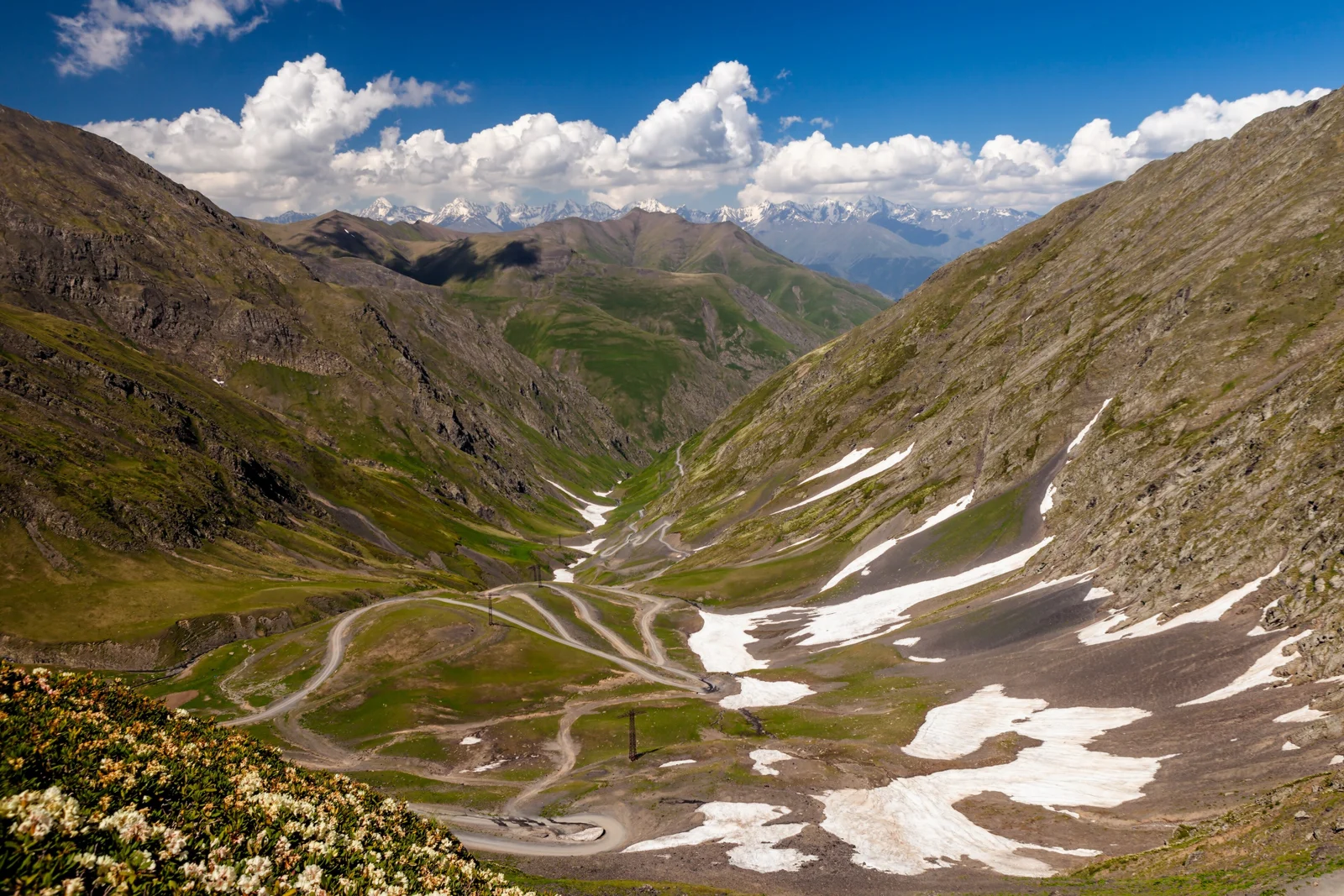
The road leaves the Kakheti lowlands at Pshaveli, about 25 km from Telavi, and climbs over the Abano Pass to Omalo in Tusheti: about 75 km of narrow, mostly unpaved, exposed mountain track. The pass is 2,826 m (Wikipedia; other sources round it up to 2,900 m), one of the highest drivable passes in the Caucasus, and the road is regularly listed among the most dangerous anywhere. No barriers. Sheer drops. Water crossings. Rockfall and landslides that can close it for days. One-lane sections where meeting an oncoming 4x4 means somebody reverses on a cliff edge.
In good conditions it is also one of the great rides of the Caucasus.
Rules before you commit:
- Season. The pass is snowbound most of the year: it is typically closed from mid-October to around mid-June, opening later or earlier depending on the year’s snow and landslides (the Roads Department of Georgia and the Tusheti Protected Areas Administration announce it). Early June can find it still shut, and some Tusheti homestays don’t open until July. Treat the window as provisional and check this year’s actual status before you commit.
- Weather. Ride it dry, ride it early. Rain turns the surface and the drops lethal, and afternoons build cloud and storms.
- The bike. This is not the place for a fully loaded 1250 on road tyres. A manageable, well-tyred bike you can pick up alone is the right tool.
- Commitment. Once you’re on it, you’re on it. There’s no easy bail. Carry water, warm layers, a tyre repair kit and a charged phone you do not depend on for signal.
Omalo and the Tusheti villages at the top are the reward: medieval defensive towers, stone hamlets, and a high pastoral world that is cut off from the rest of the country for half the year.
Wild Camping, Fuel, Cash and Connectivity
Wild camping. Georgia is one of the friendlier countries in the region for it, and riders are more often invited in than moved on. Camp out of sight of the road; if there’s a house nearby, a quick ask goes a long way and usually ends well. Avoid border zones — especially anywhere near the administrative boundary lines with the breakaway regions of Abkhazia and South Ossetia, which are not places to wander into or camp near. Treat national parks by their posted rules.
Fuel. Good on main roads and in towns, sparse in the mountains. Fill before the Abano Pass, before long valley runs, and whenever you’re below half a tank in the highlands. A small fuel reserve is worth carrying for this route.
Cash. Cards work in Batumi and larger towns; mountain villages and small guesthouses want Georgian lari in hand. Carry cash, especially before heading into Tusheti.
Connectivity. A local SIM from Batumi gives solid coverage in populated areas and little to none on the high passes. Download offline maps for the whole route before you leave the coast, and do not plan around having signal on Abano.
What to Pack Differently Than Turkey
If you’ve come straight off part one, most of your kit carries over. What changes for Georgia:
- Border-and-money pouch. Passport, bike documents, the notarised authorisation letter if you need one, printed insurance confirmation, and a stash of lari. Keep it all in one accessible place for the crossing.
- Proper off-road tyres or at least a confident dual-sport tread. Abano and the Tusheti tracks are a real step up in difficulty from the Kaçkar gravel.
- Cold-and-wet layering for altitude. The same lesson as the Kaçkar; a clear morning in Tusheti can become cold rain by afternoon.
- A tyre repair kit for your wheels (a plug kit for tubeless, a spare tube and levers for spoked tube-type rims) and a small compressor. Rockfall debris on Abano is where you’ll need them, and where there’s no help.
- A cash buffer for unexpected guesthouse nights. Getting weathered-in costs money.
Where This Route Connects
- For the Turkish half in its wider context — which regions to combine and when each is rideable — see our ultimate Turkey motorcycle tour guide.
- The first half of this trip is the Black Sea & Kaçkar route from Amasra to Yusufeli — ride them back to back as one long Black Sea & Caucasus journey.
- For wild-camp legality and regional logic on the Turkish side, see wild camping in Turkey on a motorcycle.
- To loop back west through Turkey’s interior instead of crossing into Georgia, see the eastern Anatolia motorcycle route — Doğubayazıt, Lake Van and Nemrut.
- For more cross-border riding, the Balkans guide is the western counterpart to this eastern crossing.
This guide is compiled from published route, border and customs information and rider reports, and is published as a planning starting point, not as legal or customs advice. Re-confirm every border, insurance and visa detail against official Georgian sources, such as the Georgian e-visa portal and current Revenue Service guidance, before you ride. Some links in this article are affiliate links; if you buy gear through them, we may earn a small commission at no extra cost to you.
Frequently Asked Questions
Do I need a Green Card or extra insurance to ride into Georgia?
Two kinds. Georgia is not in the Green Card system, so your Turkish or EU motor policy does not cover it: every foreign-registered vehicle must carry Georgian compulsory third-party (MTPL) cover, which you can buy online or at the border. Separately, since 1 January 2026 every tourist must hold health and accident insurance with at least GEL 30,000 of cover, valid for the whole stay and in Georgian or English; border officers may ask for it and can refuse entry without it.
Which border crossing should I use, Sarp or Türkgözü?
Sarp/Sarpi on the Black Sea coast, 19 km past Hopa, is the busiest and most straightforward: open 24/7 and 18 km from Batumi, though it queues in the summer peak. There are two quieter, higher inland crossings: Türkgözü–Vale (near Posof, toward Akhaltsikhe), which lands you closer to Vardzia, and Aktaş–Kartsakhi near Çıldır. Coast riders take Sarp; riders coming from Yusufeli or heading for the southern highlands first can take an inland crossing. Check the inland crossings' current hours before committing.
Can I wild camp in Georgia on a motorcycle?
Georgia is one of the easier countries in the region for discreet wild camping, and riders often report being invited in for food or a bed. Camp out of sight of the road, ask if there's a house nearby, avoid border zones (especially near the South Ossetia and Abkhazia administrative boundary lines), and leave no trace. Treat protected areas and national parks by their posted rules.
Is the Abano Pass to Tusheti safe on a loaded adventure bike?
The Abano Pass is a high, narrow, unpaved mountain road with steep drops, no barriers, water crossings and rockfall, and it is regularly listed among the most dangerous roads anywhere. It is rideable by an experienced rider on a manageable bike in dry weather, and dangerous in rain or on an overloaded big bike. It is seasonal: typically closed from mid-October to around mid-June, with the dates shifting every year, so an early-June trip may find it still shut. If you are not confident on loose, exposed surfaces with a loaded bike, do not make Tusheti your first off-road test.
When is the best time to ride Turkey into Georgia?
Late June through September. The coast and lowlands are rideable from spring, but the high Caucasus passes, Abano above all, only clear of snow around mid-June and start closing again in October. July and August give you the widest open window for the mountains, at the cost of more heat and humidity on the Black Sea coast and busier Batumi. Aim for the shoulder of that window if you can.
How is fuel, cash and connectivity in rural Georgia?
Fuel is fine on main roads and in towns, and thins fast once you climb into the mountains — fill up before the Abano Pass and before long valley runs, and carry a small reserve. Cash matters: card payment is normal in Batumi and bigger towns but unreliable in mountain villages, so carry Georgian lari. A local SIM (bought cheaply in Batumi) gives good coverage in populated areas and patchy-to-none on the high passes. Download offline maps before you climb.