
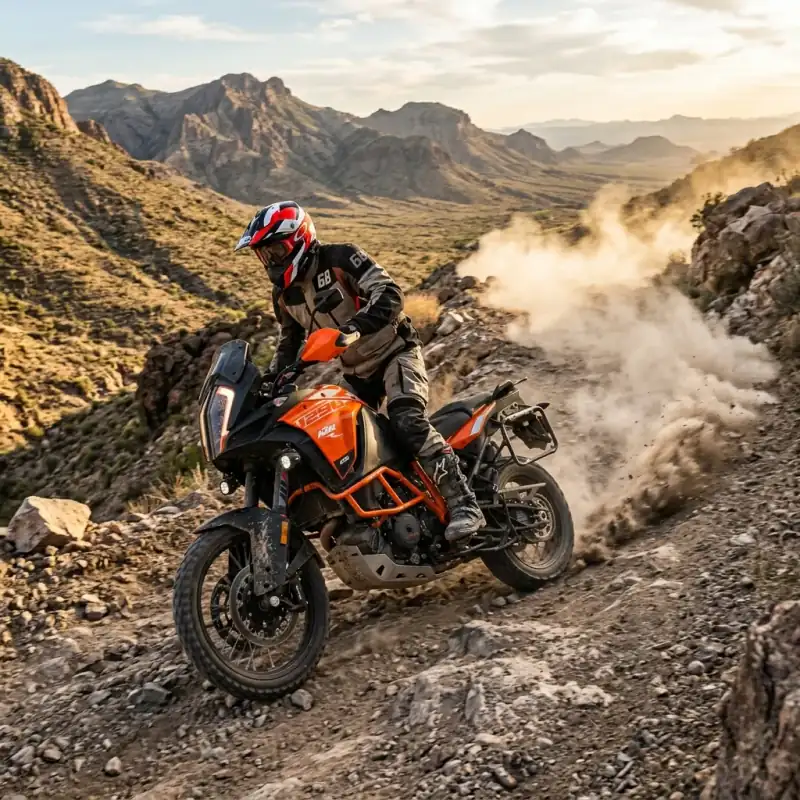
The KTM 890 Adventure R sits at the sharp end of the middleweight adventure market. The Yamaha Tenere 700 sits at the value end. Between them is $5,300, 33 horsepower, fully adjustable suspension, and a genuinely different philosophy about what an ADV bike should be.
The KTM is the more capable off-road bike; the T7 is the better value. Which is right depends almost entirely on your skill and your riding mix. The comparison uses the makers’ own specs and prices; it isn’t a ride test.
More Power vs More Money in Your Pocket
The 890 Adventure R is KTM’s rally-bred middleweight: more power, long-travel adjustable suspension and a full electronics suite. The Ténéré 700 does much of the same job for about two-thirds of the money, with a simpler engine and a strong reliability record. Two different briefs, two genuinely different bikes.
Engine Character: 72hp vs 105hp — Does It Matter?
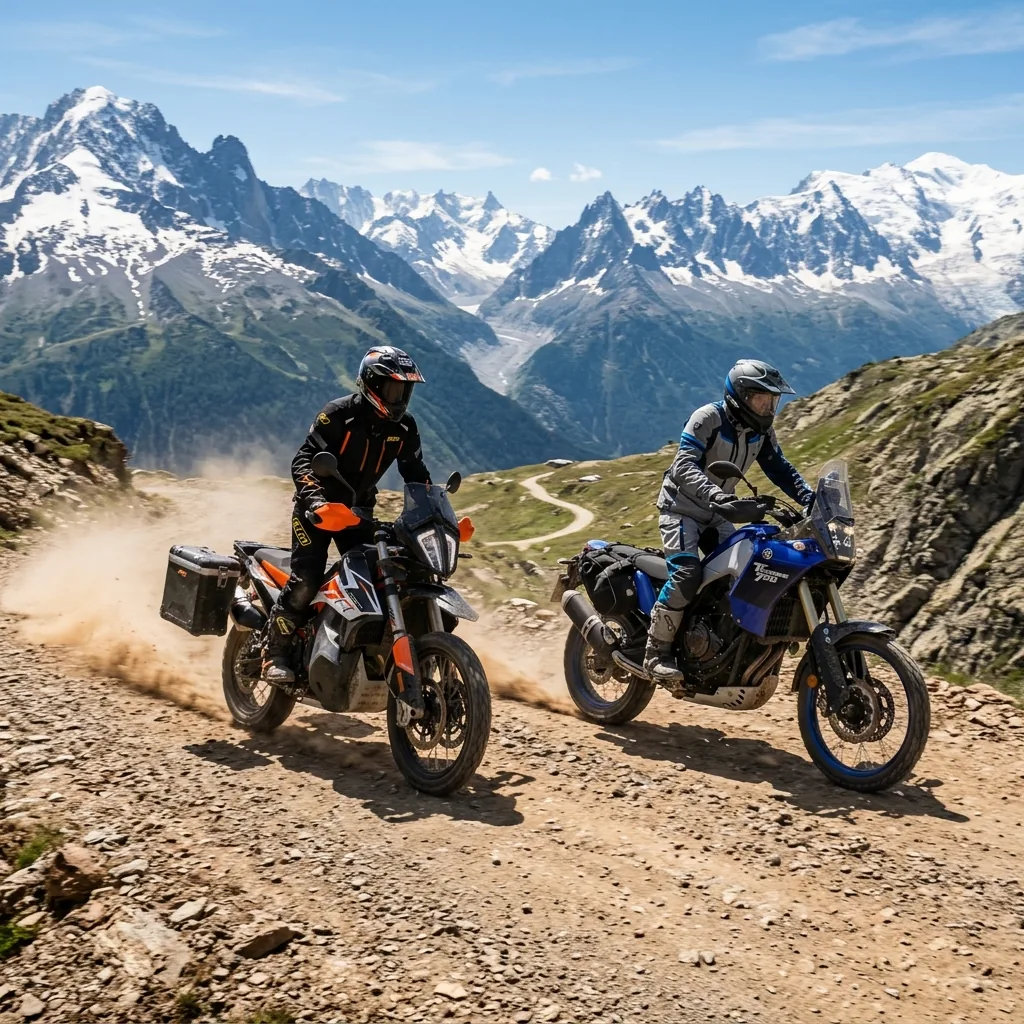
The KTM uses an 889cc parallel twin making about 105 hp and 100 Nm. The Tenere uses Yamaha’s 689cc CP2, making about 72 hp and 68 Nm. On paper, the KTM has 33 more horsepower and 32 Nm more torque.
In practice, the 890’s extra power is most useful on the highway and on fast forest tracks where you want to lift the front out of a corner. On technical single-track, the T7’s lower power delivery is actually easier to manage at low speeds.
Reviewers describe the CP2 as linear and forgiving, and the 890 as sharper and more eager to rev.
Suspension: Stock vs Fully Adjustable
This is where the KTM earns most of its premium.
The 890 Adventure R rides on WP XPLOR fully adjustable suspension — 240mm of travel at the front, 240mm at the rear. Compression, rebound and preload are all rider-adjustable, and the extra travel and damping show most on rough ground at speed.
The T7 has KYB suspension with 210mm front travel and 200mm rear: a fully adjustable fork, and a shock adjustable for preload and rebound but not compression. For most riders, this is fine. For a fast rider on rough terrain, the shorter travel and simpler shock are the limiting factor that the WP setup removes.
Aftermarket suspension is a common T7 upgrade, and even a full fork-and-shock kit leaves the bike well below the KTM’s price.
Electronics: Old School vs Full Suite
The KTM comes with cornering ABS, multi-level traction control, rally mode (which lets you set slip rate independently), and a TFT display. The 890 R also offers an optional quickshifter and cruise control.
The T7 (2025 on) has a ride-by-wire throttle, two riding modes, traction control that is either on or off, and switchable ABS. There is no IMU, so nothing in it adjusts for lean angle. Earlier T7s have switchable ABS and nothing else.
For some riders the electronics are the reason to buy the KTM; for others, the T7’s simpler set-up is the reason to buy the Yamaha.
Weight: The Surprising Result
KTM publishes 200 kg without fuel and 215 kg fully fuelled for the 890 Adventure R. Yamaha publishes 459 lbs — 208 kg — wet for the Ténéré 700, and defines wet as every fluid plus a full tank. Measured the same way, the cheaper and simpler bike is the lighter one, by about 7 kg.
That runs against the way these two are usually discussed, and the reason is mostly arithmetic. The KTM carries a bigger engine, more electronics and a 20-litre tank against the Ténéré’s 16 — four extra litres of petrol is about 3 kg before you count anything else.
What the KTM genuinely has is where it puts the mass. The wraparound tank sits beside the engine rather than above it, so the weight is lower and more central than the number suggests, and the bike changes direction more willingly than 215 kg has any right to. That is a real advantage in tight off-road work. It is also a different claim from being lighter, and the two get confused constantly.
Picking a bike up off the ground, though, is settled by the number and not by the distribution — and there the T7 is the easier machine. Over a long week of off-road riding with frequent tip-overs, seven kilos adds up in the Yamaha’s favour.
Long-Distance Comfort and Practicality
The T7 is the easier bike to live with day-to-day: fewer settings to fuss with, and a simpler machine to work on yourself.
The KTM is sharper-feeling at all times, that’s the point of the bike, but it can wear on the rider over long touring weeks. The seat is firm. The riding position is slightly more aggressive. Fuel range is similar to the T7 in practice, despite the bigger tank, because the bigger engine drinks more when ridden hard.
For a multi-month overlanding trip like the Trans Euro Trail, both bikes work; the T7’s simplicity is the stronger argument the further you get from a dealer.
KTM 890 Adventure R vs Tenere 700: Spec Comparison
The numbers, side by side.
| Spec | KTM 890 Adventure R | Yamaha Tenere 700 |
|---|---|---|
| Engine | 889cc parallel twin | 689cc CP2 parallel twin |
| Power | 105 hp / 100 Nm | 72 hp / 68 Nm |
| Wet weight (full tank) | 474 lbs / 215 kg | 459 lbs / 208 kg |
| Suspension | WP XPLOR, fully adj., 240mm | KYB, adj. fork / shock preload + rebound, 210/200mm |
| Electronics | Cornering ABS, multi-TC, rally mode, IMU | Switchable ABS, on/off TC, 2 modes |
| MSRP | $16,299 | $10,999 |
Disclosure: some links below are affiliate links. If you buy through them we may earn a small commission at no extra cost to you.
Shop KTM 890 Adventure Accessories on Amazon →
Shop Tenere 700 Accessories on Amazon →
Price: Is the KTM Worth the Premium?
KTM 890 Adventure R: $16,299. Tenere 700: $10,999. Gap: $5,300.
For that money, you get 33 more horsepower, 32 Nm more torque, fully adjustable WP suspension, and a cornering IMU with rally mode. What you do not get is a lighter bike — that one goes the other way.
For a rider who races hard enduros, who’s pushing rally-pace on rough surfaces, who pays attention to ride mode settings and uses the rally slip control deliberately; yes, that money is well spent.
For a rider who’d buy the KTM and never touch the rally settings, a T7 with a suspension upgrade covers most of the same riding for less money. For most riders that is the smarter long-term call.
Who Should Buy the KTM 890R?
You’re an advanced off-road rider. You ride rough surfaces at speed. You want the sharpest, most aggressive middleweight ADV you can buy without going up to a Rally Replica trim. You value the WP XPLOR suspension and you actually use the rally electronics deliberately, not just as a marketing feature. You can absorb higher service bills: the KTM’s oil intervals are actually longer (15,000 km against the Yamaha’s 10,000 km), but the valve check comes at 30,000 km rather than 40,000 km, and dealer labour usually costs more.
Who Should Buy the Tenere 700?
You’re an intermediate rider. You want a bike you can ride hard for years without worrying about it. You’d rather spend the $5,300 you saved on a suspension upgrade, tyres, luggage, and fuel for the actual trip. You value Yamaha’s reliability reputation and the fact that the T7 is mechanically simple enough to work on yourself.
Verdict
The KTM 890 Adventure R is the more capable bike on paper and in skilled hands. The Tenere 700 is the smarter buy for most of the riders who’ll consider this comparison.
The shape of the decision hasn’t changed in 2026: the T7 for value, the KTM for off-road performance.
If the KTM is the right bike, you already know. If you’re still asking, the T7 is the right bike.
Related Guides
For deeper context on the riding both bikes are built for, see our Tenere 700 vs Africa Twin comparison and off-road riding tips for loaded adventure bikes. Both bikes also feature in our full mid-size adventure motorcycles comparison, where the whole 650–900cc class is ranked side by side.
A note on the prices: US MSRP for the 2026 model year, checked against the manufacturers’ own US sites on 1 September 2026, and excluding destination and dealer charges. MSRP moves with model-year updates and dealer pricing — confirm the current figure before you budget.
Disclosure: Some of the links in this article are affiliate links. If you buy gear through them, we may earn a small commission at no extra cost to you. It never changes a recommendation, and nothing here is sponsored.
Frequently Asked Questions
Is the KTM 890 Adventure R worth $5,300 more than the Tenere 700?
It depends on how serious you are about off-road. The KTM has WP XPLOR suspension with 240mm of travel at both ends, 33 more horsepower and a cornering IMU, though, on the makers' own figures, it is about 7 kg heavier fully fuelled. For aggressive off-road riding, those upgrades are real. For a rider doing mostly pavement with occasional gravel, they're capability you'll never use — and the T7 leaves you with $5,300 in the bank.
Which is more reliable, the KTM 890 or the Tenere 700?
The Tenere 700 has the stronger reputation. Yamaha's CP2 engine has a long track record of high-mileage trouble-free service. Earlier KTM 790/890 bikes drew owner complaints, fuel pumps among them, which KTM has worked on since. Both are good motorcycles in 2026, but the T7's reputation for long-term ownership is the stronger of the two.
Does the KTM 890 Adventure R have a quickshifter?
Yes, an optional bi-directional quickshifter is available on the 890 Adventure R and standard on some trim packages. Since the 2025 update the T7 offers one too, as a Yamaha accessory, so it is no longer a reason to pick the KTM on its own.
How much does the KTM 890 Adventure R weigh compared to the Tenere 700?
The other way round, and it surprises people. KTM's own 2026 sheet gives the 890 Adventure R 200 kg without fuel and 215 kg fully fuelled (474 lbs). Yamaha publishes 459 lbs (208 kg) wet for the Tenere 700, full tank included. So the T7 is the lighter bike by about 7 kg — the KTM carries a bigger engine, more hardware and 20 litres of fuel against the Yamaha's 16.
Which has better fuel economy, the KTM 890 or the Tenere 700?
Expect the bigger KTM engine to use more fuel, especially ridden hard, and the KTM to carry more of it: 20 litres against the Ténéré's 16. The two tend to even out on range, and neither is a fuel-economy outlier for its class.